Showing posts with label Scott Hanselman's Blog. Show all posts

Sunday, 15 April 2018

Retrogaming on original consoles in HDMI on a budget

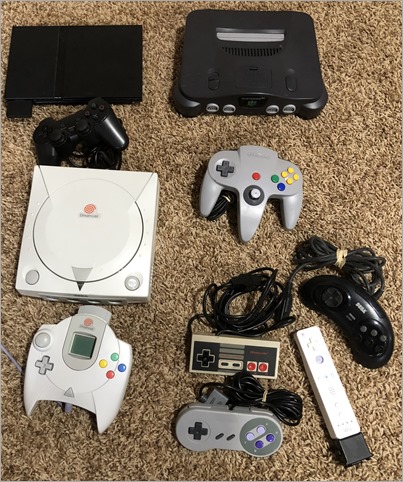
Just a few of my consoles. There's a LOT off screen.My sons (10 and 12) and I have been enjoying Retrogaming as a hobby of late. Sure there's a lot of talk of 4k 60fps this and that, but there's amazing stories in classing video games. From The Legend of Zelda (all of them) to Ico and Shadow of the Colossus, we are enjoying playing games across every platform. Over the years we've assembled quite the collection of consoles, most purchased at thrift stores.

Initially I started out as a purist, wanting to play each game on the original console unmodified. I'm not a fan of emulators for a number of reasons. I don't particularly like the idea of illegal ROM come up and I'd like to support the original game creators. Additionally, if I can support a small business by purchasing original game cartridges or CDs, I prefer to do that as well. However, the kids and I have come up with somewhat of a balance in our console selection.

For example, we enjoy the Hyperkin Retron 5 in that it lets us play NES, Famicom, SNES, Super Famicom, Genesis, Mega Drive, Game Boy, Game Boy Color, & Game Boy over 5 category ports. with one additional adapter, it adds Game Gear, Master System, and Master System Cards. It uses emulators at its heart, but it requires the use of the original game cartridges. However, the Hyperkin supports all the original controllers - many of which we've found at our local thrift store - which strikes a nice balance between the old and the new. Best of all, it uses HDMI as its output plug which makes it super easy to hook up to our TV.

The prevalence of HDMI as THE standard for getting stuff onto our Living Room TV has caused me to dig into finding HDMI solutions for as many of my systems as possible. Certainly you CAN use a Composite Video Adapter to HDMI to go from the classic Yellow/White/Red connectors to HDMI but prepare for disappointment. By the time it gets to your 4k flat panel it's gonna be muddy and gross. These aren't upscalers. They can't clean an analog signal. More on that in a moment because there are LAYERS to these solutions.

Some are simple, and I recommend these (cheap products, but they work great) adapters:

  • Wii to HDMI Adapter - The Wii is a very under-respected console and has a TON of great games. In the US you can find a Wii at a thrift store for $20 and there's tens of millions of them out there. This simple little adapter will get you very clean 480i or 480p HDMI with audio. Combine that with the Wii's easily soft-modded operating system and you've got the potential for a multi-system emulator as well.
  • PS2 to HDMI Adapter - This little (cheap) adapter will get you HTMI output as well, although it's converted off the component Y Cb/Pb Cr/Pr signal coming out. It also needs USB Power so you may end up leaching that off the PS2 itself. One note - even though every PS2 can also play PS1 games, those games output 240p and this adapter won't pick it up, so be prepared to downgrade depend on the game. But, if you use a Progressive Scan 16:9 Widescreen game like God of War you'll be very pleased with the result.
  • Nintendo N64 - THIS is the most difficult console so far to get HDMI output from. There ARE solutions but they are few and far between and often out of stock. There's an RGB mod that will get you clean Red/Green/Blue outputs but not HDMI. You'll need to get the mod and then either do the soldering yourself or find a shop to do it for you. The holy grail is the UltraHDMI Mod but I have yet to find one and I'm not sure I want to pay $150 for it if I do.
    • The cheapest and easiest thing you can and should do with an N64 is get a Composite & C-Video converter box. This box will also do basic up-scaling as well, but remember, this isn't going to create pixels that aren't already there.
  • Dreamcast - There is an adapter from Akura that will get you all the way to HDMI but it's $85 and it's just for Dreamcast. I chose instead to use a Dreamcast to VGA cable, as the Dreamcast can do VGA natively, then a powered VGA to HDMI box. It doesn't upscale, but rather passes the original video resolution to your panel for upscaling. In my experience this is a solid budget compromise.

If you're ever in or around Portland/Beaverton, Oregon, I highly recommend you stop by Retro Game Trader. Their selection and quality is truly unmatched. One of THE great retro game stores on the west coast of the US.
The games and systems at Retro Game Trader are amazing Retro Game Trader has shelves upon shelves of classic games

For legal retrogames on a budget, I also enjoy the new "mini consoles" you've likely heard a lot about, all of which support HDMI output natively!

  • Super NES Classic (USA or Europe have different styles) - 21 classic games, works with HDMI, includes controllers
  • NES Classic - Harder to find but they are out there. 30 classic games, plus controllers. Tiny!
  • Atari Flashback 8 - 120 games, 2 controllers AND 2 paddles!
  • C64 Mini - Includes Joystick and 64 games AND supports a USB Keyboard so you can program in C64 Basic
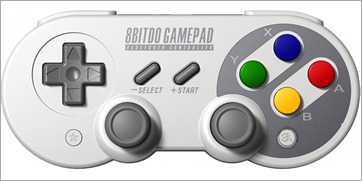
8bitdo-sfc30-pro-controller-gamepad-538219.4In the vein of retrogaming, but not directly related, I wanted to give a shootout to EVERYTHING that the 8BitDo company does. I have three of their controllers and they are amazing. They get constant firmware updates, and particularly the 8Bitdo SF30 Pro Controller is amazing as it works on Windows, Mac, Android, and Nintendo Switch. It pairs perfectly with the Switch, I use it on the road with my laptop as an "Xbox" style controller and it always Just Works. Amazing product.

If you want the inverse - the ability to use your favorite controllers with your Windows, Mac, or Raspberry Pi, check out their Wireless Adapter. You'll be able to pair all your controllers and use them on your PC - Xbox One S/X Bluetooth controller, PS4, PS3, Wii Mote, Wii U Pro wirelessly on Nintendo Switch with DS4 Motion and Rumble features! NOTE: I am NOT affiliated with 8BitDo at all, I just love their products.

We are having a ton of fun doing this. You'll always be on the lookout for old and classic games at swap meets, garage sales, and friends' houses. There's RetroGaming conventions and Arcades (like Ground Kontrol in Portland) and an ever-growing group of new friends and enthusiasts.

This post uses Amazon Referral Links and I'll use the few dollars I get from YOU uses them to buy retro games for the kids! Also, go subscribe to the Hanselminutes Podcast today! We're on iTunes, Spotify, Google Play, and even Twitter! Check out the episode where Matt Phillips from Tanglewood Games uses a 1995 PC to great a NEW Sega Megadrive/Genesis game in 2018!


Sponsor: Announcing Raygun APM! Now you can monitor your entire application stack, with your whole team, all in one place. Learn more!


© 2018 Scott Hanselman. All rights reserved.


from
http://feeds.hanselman.com/~/539433312/0/scotthanselman~Retrogaming-on-original-consoles-in-HDMI-on-a-budget.aspx

Sunday, 1 April 2018

Easier functional and integration testing of ASP.NET Core applications

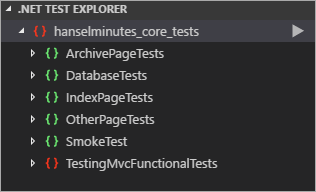
.NET Test ExplorerIn ASP.NET 2.1 (now in preview) there's apparently a new package called Microsoft.AspNetCore.Mvc.Testing that's meant to help streamline in-memory end-to-end testing of applications that use the MVC pattern. I've been re-writing my podcast site at https://hanselminutes.com in ASP.NET Core 2.1 lately, and recently added some unit testing and automatic unit testing with code coverage. Here's a couple of basic tests. Note that these call the Razor Pages directly and call their OnGet() methods directly. This shows how ASP.NET Core is nicely factored for Unit Testing but it doesn't do a "real" HTTP GET or perform true end-to-end testing.

These tests are testing if visiting URLs like /620 will automatically redirect to the correct full canonical path as they should.

[Fact]

public async void ShowDetailsPageIncompleteTitleUrlTest()
{
// FAKE HTTP GET "/620"
IActionResult result = await pageModel.OnGetAsync(id:620, path:"");

RedirectResult r = Assert.IsType<RedirectResult>(result);
Assert.NotNull(r);
Assert.True(r.Permanent); //HTTP 301?
Assert.Equal("/620/jessica-rose-and-the-worst-advice-ever",r.Url);
}

[Fact]
public async void SuperOldShowTest()
{
// FAKE HTTP GET "/default.aspx?showId=18602"
IActionResult result = await pageModel.OnGetOldShowId(18602);

RedirectResult r = Assert.IsType<RedirectResult>(result);
Assert.NotNull(r);
Assert.True(r.Permanent); //HTTP 301?
Assert.StartsWith("/615/developing-on-not-for-a-nokia-feature",r.Url);
}

I wanted to see how quickly and easily I could do these same two tests, except "from the outside" with an HTTP GET, thereby testing more of the stack.

I added a reference to Microsoft.AspNetCore.Mvc.Testing in my testing assembly using the command-line equivalanet of "Right Click | Add NuGet Package" in Visual Studio. This CLI command does the same thing as the UI and adds the package to the csproj file.

dotnet add package Microsoft.AspNetCore.Mvc.Testing -v 2.1.0-preview1-final

It includes a new WebApplicationTestFixture that I point to my app's Startup class. Note that I can take store the HttpClient the TestFixture makes for me.

public class TestingMvcFunctionalTests : IClassFixture<WebApplicationTestFixture<Startup>>

{
public HttpClient Client { get; }

public TestingMvcFunctionalTests(WebApplicationTestFixture<Startup> fixture)
{
Client = fixture.Client;
}
}

No tests yet, just setup. I'm using SSL redirection so I'll make sure the client knows that, and add a test:

public TestingMvcFunctionalTests(WebApplicationTestFixture<Startup> fixture)

{
Client = fixture.Client;
Client.BaseAddress = new Uri("https://localhost");
}

[Fact]
public async Task GetHomePage()
{
// Arrange & Act
var response = await Client.GetAsync("/");

// Assert
Assert.Equal(HttpStatusCode.OK, response.StatusCode);
}

This will fail, in fact. Because I have an API Key that is needed to call out to my backend system, and I store it in .NET's User Secrets system. My test will get an InternalServerError instead of OK.

Starting test execution, please wait...

[xUnit.net 00:00:01.2110048] Discovering: hanselminutes.core.tests
[xUnit.net 00:00:01.2690390] Discovered: hanselminutes.core.tests
[xUnit.net 00:00:01.2749018] Starting: hanselminutes.core.tests
[xUnit.net 00:00:08.1088832] hanselminutes_core_tests.TestingMvcFunctionalTests.GetHomePage [FAIL]
[xUnit.net 00:00:08.1102884] Assert.Equal() Failure
[xUnit.net 00:00:08.1103719] Expected: OK
[xUnit.net 00:00:08.1104377] Actual: InternalServerError
[xUnit.net 00:00:08.1114432] Stack Trace:
[xUnit.net 00:00:08.1124268] D:\github\hanselminutes-core\hanselminutes.core.tests\FunctionalTests.cs(29,0): at hanselminutes_core_tests.TestingMvcFunctionalTests.<GetHomePage>d__4.MoveNext()
[xUnit.net 00:00:08.1126872] --- End of stack trace from previous location where exception was thrown ---
[xUnit.net 00:00:08.1158250] Finished: hanselminutes.core.tests
Failed hanselminutes_core_tests.TestingMvcFunctionalTests.GetHomePage
Error Message:
Assert.Equal() Failure
Expected: OK
Actual: InternalServerError

Where do these secrets come from? In Development they come from user secrets.

public Startup(IHostingEnvironment env)

{
this.env = env;
var builder = new ConfigurationBuilder();

if (env.IsDevelopment())
{
builder.AddUserSecrets<Startup>();
}
Configuration = builder.Build();
}

But in Production they come from the ENVIRONMENT. Are these tests Development or Production...I must ask myself.  They are Production unless told otherwise. I can override the Fixture and tell it to use another Environment, like "Development." Here is a way (given this preview) to make my own TestFixture by deriving and grabbing and override to change the Environment. I think it's too hard and should be easier.

Either way, the real question here is for me - do I want my tests to be integration tests in development or in "production." Likely I need to make a new environment for myself - "testing."

public class MyOwnTextFixture<TStartup> : WebApplicationTestFixture<Startup> where TStartup : class

{
public MyOwnTextFixture() { }

protected override void ConfigureWebHost(IWebHostBuilder builder)
{
builder.UseEnvironment("Development");
}
}

However, my User Secrets still aren't loading, and that's where the API Key is that I need.

BUG?: There is either a bug here, or I don't know what I'm doing. I'm loading User Secrets in builder.AddUserSecrets<Startup> and later injecting the IConfiguration instance from builder.Build() and going "_apiKey = config["SimpleCastAPIKey"];" but it's null. The config that's injected later in the app isn't the same one that's created in Startup.cs. It's empty. Not sure if this is an ASP.NE Core 2.0 thing or 2.1 thing but I'm going to bring it up with the team and update this blog post later. It might be a Razor Pages subtlety I'm missing.
For now, I'm going to put in a check and manually fix up my Config. However, when this is fixed (or I discover my error) this whole thing will be a pretty nice little set up for integration testing.

I will add another test, similar to the redirect Unit Test but a fuller integration test that actually uses HTTP and tests the result.

[Fact]

public async Task GetAShow()
{
// Arrange & Act
var response = await Client.GetAsync("/620");

// Assert
Assert.Equal(HttpStatusCode.MovedPermanently, response.StatusCode);
Assert.Equal("/620/jessica-rose-and-the-worst-advice-ever",response.Headers.Location.ToString());
}

There's another issue here that I don't understand. Because have to set Client.BaseAddress to https://localhost (because https) and the Client is passed into fixture.Client, I can't set the Base address twice or I'll get an exception, as the Test's Constructor runs twice, but the HttpClient that's passed in as a lifecycler that's longer. It's being reused, and it fails when setting its BaseAddress twice.

Error Message:

System.InvalidOperationException : This instance has already started one or more requests. Properties can only be modified before sending the first request.

BUG? So to work around it I check to see if I've done it before. Which is gross. I want to set the BaseAddress once, but I am not in charge of the creation of this HttpClient as it's passed in by the Fixture.

public TestingMvcFunctionalTests(MyOwnTextFixture<Startup> fixture)

{
Client = fixture.Client;
if (Client.BaseAddress.ToString().StartsWith("https://") == false)
Client.BaseAddress = new Uri("https://localhost");
}

Another option is that I create a new client every time, which is less efficient and perhaps a better idea as it avoids any side effects from other tests, but also feels weird that I should have to do this, as the new standard for ASP.NET Core sites is to be SSL/HTTPS by default..

public TestingMvcFunctionalTests(MyOwnTextFixture<Startup> fixture)

{
Client = fixture.CreateClient(new Uri(https://localhost));
}

I'm still learning about how it all fits together, but later I plan to add in Selenium tests to have a full, complete, test suite that includes the browser, CSS, JavaScript, end-to-end integration tests, and unit tests.

Let me know if you think I'm doing something wrong. This is preview stuff, so it's early days!


Sponsor: Get the latest JetBrains Rider for debugging third-party .NET code, Smart Step Into, more debugger improvements, C# Interactive, new project wizard, and formatting code in columns.


© 2018 Scott Hanselman. All rights reserved.


from
http://feeds.hanselman.com/~/536365756/0/scotthanselman~Easier-functional-and-integration-testing-of-ASPNET-Core-applications.aspx

Thursday, 15 March 2018

Cross-platform GUIs with open source .NET using Eto.Forms

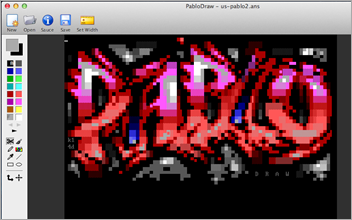
Amazing Cross Platform ANSI art editorThis is one of those "Did you know you could do THAT?" Many folks have figured out that C#/F#/.NET is cross-platform and open0source and runs on basically any operating system. People are using it to create micro services, web sites, and webAPI's all over. Not to mention iPhone/Android apps with Xamarin and video games with Unity and MonoGame.

But what about cross platform UIs?

While not officially supported by Microsoft - you can do some awesome stuff...as is how Open Source is supposed to work! Remember that there's a family of .NET Runtimes now, there's the .NET Framework on Windows, there's xplat .NET Core, and there's xplat Mono.

Eto.Forms has been in development since 2012 and is a cross-platform framework for creating GUI (Graphical User Interface, natch) applications with .NET that run across multiple platforms using their native toolkit. Not like Java in the 90s with custom painted buttons on canvas.

It's being used for real stuff! In fact, PabloDraw is an Ansi/Ascii text editor that you didn't know you needed in your life. But you do. It runs on Windows, Mac, and Linux and was written using Eto.Forms but has a native UI on each platform. Be sure to check out Curtis Wensley's Twitter account for some cool examples of what PabloDraw and Eto.Forms can do!

  • OS X: MonoMac or Xamarin.Mac (and also iOS via Xamarin)
  • Linux: GTK# 2 or 3
  • Windows: Windows Forms (using GDI or Direct2D) or WPF

Here's an example Hello World. Note that it's not just Code First, you can also use Xaml, or even Json (.jeto) to layout your forms!

using Eto.Forms;

using Eto.Drawing;

public class MyForm : Form
{
public MyForm ()
{
Title = "My Cross-Platform App";
ClientSize = new Size(200, 200);
Content = new Label { Text = "Hello World!" };
}

[STAThread]
static void Main()
{
new Application().Run(new MyForm());
}
}

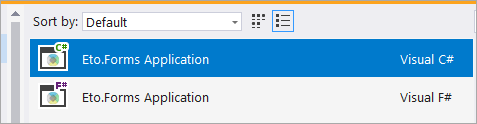
Or I can just File | New Project with their Visual Studio Extension. You should definitely give it a try.

image

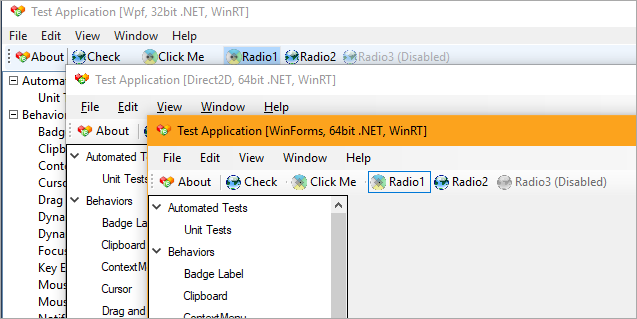
Even on the same platform (Windows in the below example) amazingly Eto.Forms can use whatever Native Controls you prefer. Here's a great example zip that has precompiled test apps.

WinForms, WPF, and Direct2D apps

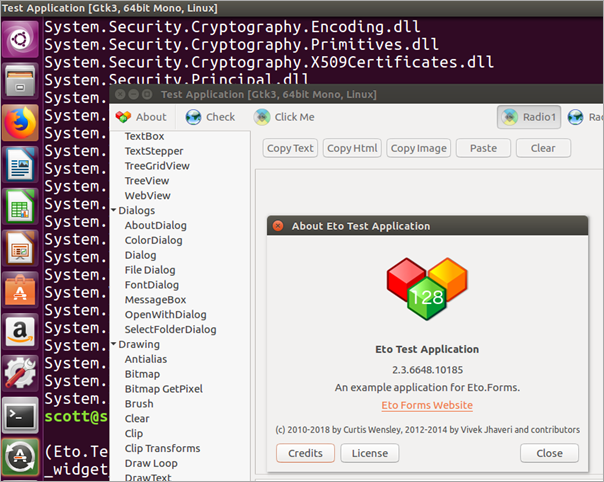
Once you've installed a new version of Mono on Ubuntu, you can run the same sample as Gtk3, as I'm doing here in a VM. AMAZING.

image

Here's some example applications that are in the wild, using Eto.Forms:

There's so much cool stuff happening in open source .NET right now, and Eto.Forms is actively looking for help. Go check out their excellent Wiki, read the Tutorials, and maybe get involved!


Sponsor: Get the latest JetBrains Rider for debugging third-party .NET code, Smart Step Into, more debugger improvements, C# Interactive, new project wizard, and formatting code in columns.


© 2017 Scott Hanselman. All rights reserved.


from
http://feeds.hanselman.com/~/532839470/0/scotthanselman~Crossplatform-GUIs-with-open-source-NET-using-EtoForms.aspx